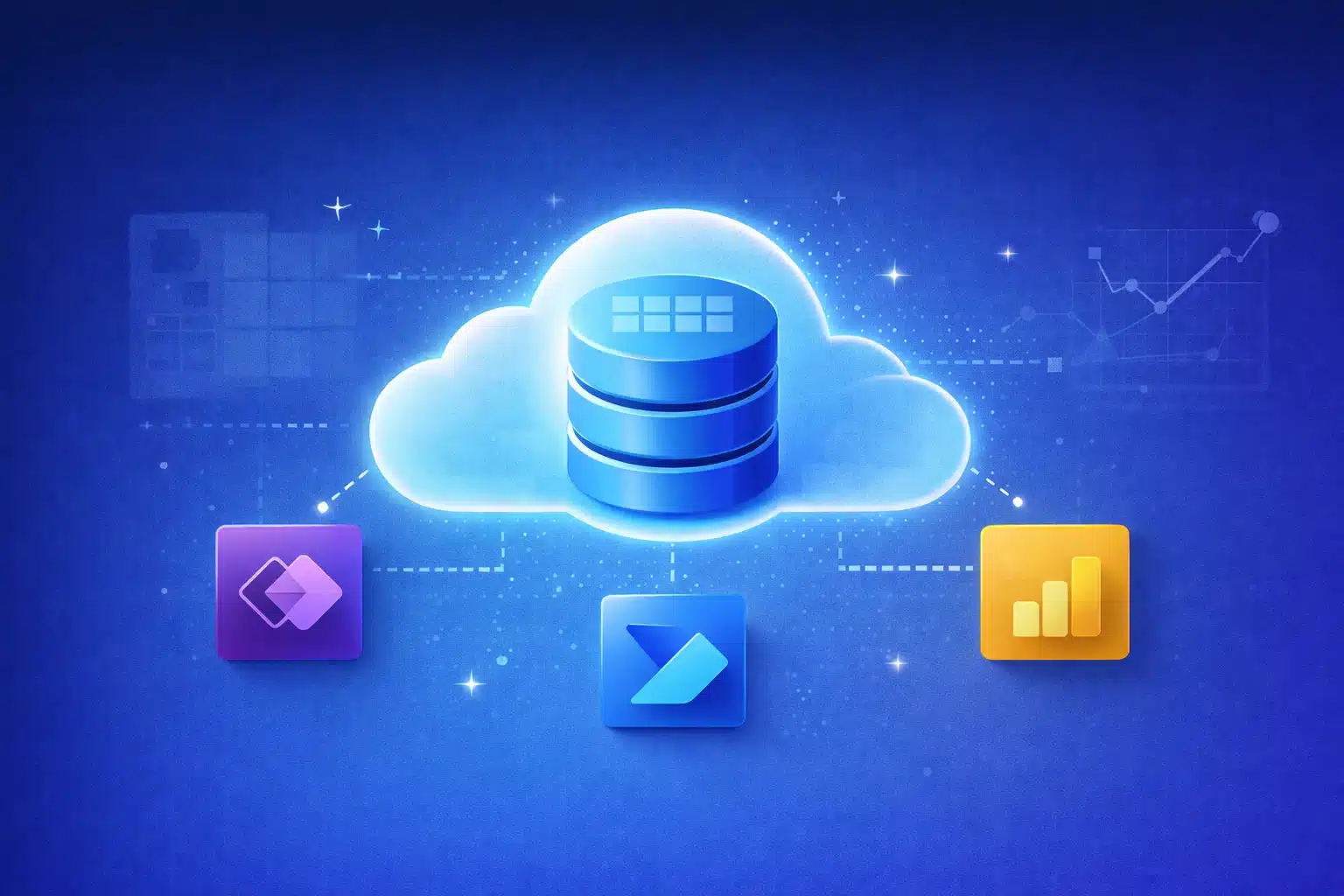
Data resilience is critical for businesses to maintain business continuity and safeguard critical operations. This requires a robust data foundation or a unified data platform that supports app development, process automation and deep analytics. Microsoft Dataverse is a dynamic and scalable data management platform that works as part of the Power Platform ecosystem and connects to Microsoft 365 and other Dynamics 365 applications.
At its core, Microsoft Dataverse is a centralised data service that simplifies how businesses store, manage, and use data across multiple applications. Understanding Dataverse is critical to unlock the complete potential of Microsoft’s low-code ecosystem.
Let us get started.
What is Microsoft Dataverse?
Microsoft Dataverse, or Common Data Service (as it was known earlier), is a cloud-based data platform designed to standardise and streamline data across Microsoft’s Power Platform and Dynamics 365. It is basically a shared, structured database that acts as a central source of truth for all business applications.
Microsoft Dataverse enforces consistency through validation rules and business logic, and provides a security model with fine-grained access control. With built-in auditing, versioning, and governance features, Dataverse ensures traceability and is ideal for enterprise-level metadata management.
Unlike traditional databases, Dataverse is more than just tables; it integrates security, logic, data, and storage into a single, centralised platform. It powers multiple Microsoft Dynamics 365 solutions, including Field Service, Customer Insights, Customer Service, and Sales. It is also integrated with the Power Platform for AI Builders, specifically into Power Apps and Power Automate, providing native connectivity.
In short, it is the central nervous system of Power Platform solutions.
How Does Microsoft Dataverse Work?
Microsoft Dataverse structures into customisable tables, which can interact with each other through user-created relationships in Power Query. Each table consists of rows (or records) and columns (or fields). Users can define data types and formats for these fields to ensure consistent and validated data using custom rules and logic.
After considering all of this, Dataverse helps with automation, workflow creation and overall business efficiency. It also integrates deeply with other services and applications, enabling data to be shared and accessed across systems while maintaining robust security and compliance measures that protect data integrity and privacy.
Also Check – Power of Onelake in Microsoft Fabric
Benefits of Microsoft Dataverse:
Unified Data Model:
Dataverse uses a standard data model that standardises data across applications and deployments. This provides consistency, making it easier to build, test, and deploy solutions that use reliable, structured data. Imagine building a customer service app that leverages data from your CRM system and from SharePoint customer feedback surveys. Dataverse makes this a breeze.
Seamless Integration with the rest of the Microsoft Ecosystem:
It integrates seamlessly with other Microsoft products such as Dynamics 365, Microsoft 365, and Power Platform, enabling users to create apps and workflows that leverage data from multiple sources without extensive coding.
Security and Compliance:
Dataverse offers strong data protection through encryption, detailed auditing, and granular access controls. This helps organisations meet regulations such as GDPR and HIPAA with confidence.
Enterprise-Grade Security:
Built on Azure Active Directory, Dataverse uses familiar identity management tools for user authentication and access control. Role-based permissions and field-level security ensure sensitive data, such as personally identifiable information, is tightly governed.
Comprehensive Governance:
With role-based access control, data loss prevention policies, auditing, and logging, Dataverse ensures data is both accessible to the right users and protected from misuse or accidental leaks.
On-Demand Scalability:
Being cloud-based, Dataverse can expand or shrink to meet user needs, maintaining smooth performance as your business and data volumes grow.
Rich Metadata and Data Integrity:
It supports detailed metadata, such as relationships, descriptions, and validation rules, which help maintain data quality and relevance across applications and processes.
Boosts Developer Efficiency:
Developers benefit from direct API access to both data and metadata, facilitating the creation of custom connectors and integrations — accelerating the development process.
Automation & AI:
Dataverse integrates with AI Builder and Power Automate, enabling businesses to implement machine learning models and automated workflows, speeding operations, predicting trends, and driving data-driven decisions.
Flexible Data Storage and Management:
By centralising data, Dataverse eliminates the hassle of handling multiple databases or scattered spreadsheets. Pre-built data models help users avoid building tables and relationships from scratch. It supports a wide variety of data types, ranging from simple text and numbers to images, files, choices, and complex relational data making it versatile enough for diverse business needs.
Empowers Developers:
Through low-code/no-code platforms in Power Platform, business users can rapidly create custom apps and automated workflows with reusable components, reducing time-to-market.
Compliance & Audit Ready:
Maintaining documented data classifications, retention policies, and audit trails within Dataverse helps organisations prepare for compliance checks and regulatory audits effortlessly.
Dataverse and Power Platform Applications
Every app, report, or workflow built using Microsoft Power Platform depends on data. Microsoft Dataverse serves as the backbone of the entire platform by providing a unified data layer that all Power Platform tools can access.
Power Apps, for instance, can use Dataverse to create apps that interact directly with core business data, be it managing customer records, logging service requests, or tracking inventory. Power Automate can then use this data to automate workflows, such as sending alerts when inventory is low or approving new records. Meanwhile, Power BI can connect to Dataverse and generate real-time dashboards and reports with consistent, high-quality data.
With this centralised source of truth, businesses eliminate inconsistencies, duplication, and errors that often arise from disparate systems. This helps with quick decision-making, stronger collaboration, and a seamless user experience across functions.
| Application | Dataverse Role |
| Power Platform | Centralised, scalable backend that ensures consistent inventory data, prevents data errors, automates restocking workflows, and improves efficiency and speed. |
| Dynamics 365 | Stores comprehensive case and customer history; enables personalised support; automates case assignment and escalation; enhances resolution speed. |
| Microsoft 365 | Automatic tagging of documents, dynamic Teams membership based on roles, improves content discovery and collaboration, reflecting real-time org changes. |
| Azure | Centralised authentication and authorisation; applies granular RBAC policies per user/role; consistent security across all apps accessing Dataverse. |
| Third-Party Systems | Real-time data sharing inside Salesforce; seamless access for sales/support staff; improved customer service without switching platforms. |
Microsoft Dataverse offers AI capabilities and expanded data management features. The introduction of Copilot for Dataverse enhances user experience by automating data modelling, suggesting schema improvements, and streamlining workflows through language commands. Dataverse now also offers broader integration options, enabling it to connect with external data sources to unify enterprise data across systems. Do you want to get started on a discussion on this? Reach out to our experts right away.