A strong business network infrastructure ensures uptime and productivity. A reliable network infrastructure forms the backbone of business operations, keeps both teams and customers connected. The choice between wired and wireless networks encompasses everything from uptime and performance to security and compliance. Depending on the business setup and goals, both options offer distinct benefits and trade-offs. Choosing between a wired Vs wireless network determines your business’s connectivity reliability and performance. The basics first.
What Are Wired Networks?
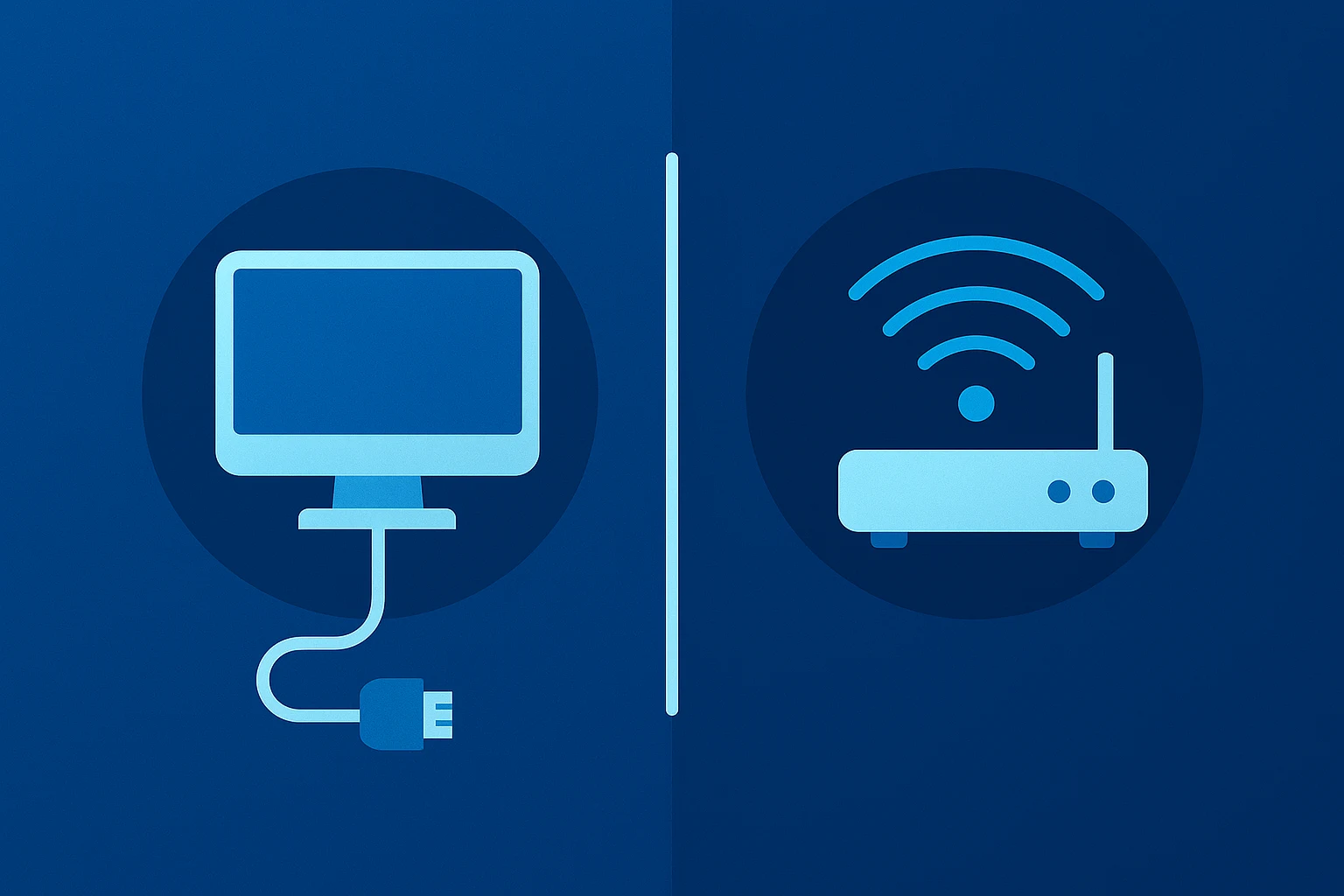
Wired networks, or physical networks, use Ethernet and fibre-optic cables to connect multiple devices. Wired networks provide robust speed and high-frequency network security the sole of this network being a wire, with data travelling through cables. Wired networks minimise the need for physical interaction and are highly recommended for a secure connection to avoid cyber-attacks. The four major components of the wired network are Routers, cables, hubs and switches.
Advantages of Wired Networking:
Speed
Network speed is critical to managing business operations, and wired networks are ideal for transferring data faster than wireless networks. Highly suitable for offices, businesses, stores, data centres, financial and educational institutions.
Security
Wired networks are far more secure than wireless networks because the data travels through wires and is less vulnerable to external hacking.
Reliability:
Disturbances in business operations due to network failures, slow network connections, or other technical factors can be expensive. Wired networks are not likely to be affected by interfaces from other devices.
What are Wireless Networks?
Wireless networks operate without cables and use radio waves. The wireless network provides multiple latest functionalities, such as Wi-Fi, cellular networks, and Bluetooth. There are three major components of a wireless network: wireless network adaptors, wireless routes, and access points.
Advantages of Wireless Networking:
Provides Mobility:
Wireless networks are mobile and can be accessed from anywhere. There is no need to be bound with wires, and users can move anywhere within the network connection area.
Easy Installation:
Wireless networks are easy to install and reduce the cost of using wires or cables to set up the network. In other words, it is hassle-free and easy to install.
Wired Vs Wireless Networking: Key Differences
The key difference between wired and wireless network types lies in how devices connect and communicate. Further:
| Factor | Wired Networking | Wireless Networking |
| Data Transfer | Up to 1 Gbps (Higher and more stable speeds) | Up to 600 Mbps (Speeds can vary with distance and interference) |
| Reliability | Very stable, up to 99% uptime with minimal interference | Prone to interference from physical barriers and devices, less stable |
| Latency | Almost instant response times are ideal for real-time applications such as gaming. | Higher latency can affect performance in latency-sensitive apps. |
| Security | More secure; physical access is needed to tap connections. | More vulnerable to hacking; requires strong encryption and continuous monitoring. |
| Installation | Requires physical cabling and setup, and is more complex. | Easier and quicker to install, no cables needed. |
| Scalability | Scaling requires adding cables and ports | Easily scalable by adding access points |
| Mobility | Restricted by cable length, less flexible | Provides freedom to move within range |
| Use Cases | Preferred for critical, high-performance tasks like offices, gaming, and data centres | Preferred for large areas, mobile users, and flexible environments |
| Barriers affecting Performance | Less affected by walls or interference | Signals degrade through walls and suffer from interference |
| Cost | Higher upfront cost for cabling and infrastructure | Lower initial cost; potential for frequent hardware upgrades |
| Maintenance | Requires cable management and physical upkeep | Requires firmware updates and Wi-Fi security management |
| Future-proofing | Faster with new cable standards (e.g., Cat6a, Cat8) | Improving with Wi-Fi 6/7 and 5G, but still behind wired speeds |
| Security Enhancements | Physical access control and secure facilities are required | Uses protocols like WPA2/3, and multi-layer security approaches are needed |
| Hybrid Network Suitability | Often used in combination for best performance and flexibility | Complements wired with mobility and easy connectivity |
Understanding the advantages and disadvantages of wireless vs wired networks helps businesses pick the right setup.
Factors to Consider Before Choosing Wired/Wireless:
Connectivity Requirements and Future Business Objectives:
Consider how much bandwidth is needed daily. Ethernet offers stable connections, great for fast online use. Wireless networks are suitable for moving around, but can be affected by walls or devices. If you are growing your network, upgrade the hardware or add more connections as needed later.
Evaluate the Immediate Environment:
Consider the existing space, users and infrastructure in use. Smaller areas may need fewer cables, while larger areas may require stronger wiring. A mix of both can work well in places that require both speed and reliability. Busy areas and noise levels also need to be considered.
Consulting the Right Networking Solutions Provider:
IT evaluate with expertise and recommends wired connections for essential tasks or wireless connections for devices on the move.
Security:
Wireless options are recommended for flexible setups, offering quick installation and easy scalability.
Consider Speed Needs, Costs, and Budget:
A mix of wired and wireless provides reliable connections for critical tasks and flexibility where needed. Let’s discuss this point in a little bit of detail.
Balancing Wired and Wireless Networks in a Hybrid Setup:
An optimal balance between wired and wireless networks in a hybrid setup is beneficial for small office environments or more extensive business networks. Both offer distinct benefits: wired networks provide reliability and faster speeds through direct cable installation, making them ideal for data-intensive applications and cloud services.
Wireless networks, on the other hand, offer flexibility and easy installation, enhancing mobility in office spaces with frequently changing layouts. By integrating wired and wireless solutions, businesses can enjoy a scalable, adaptable network that supports diverse operational needs. The hybrid network solutions can also facilitate smoother transitions between wired and wireless connections as business demands evolve.
Firms can significantly benefit from leveraging managed services that ensure seamless installation and maintenance of the wireless network for effective integration. A robust installation strategy that sets up wires and access points ensures maximum coverage, reducing potential interference and data bottlenecks.
Kloudify for Sustainable Enterprise Networking Solutions:
Kloudify delivers end-to-end, enterprise-grade connectivity built on reliability, security, and scalability. They offer not just customised network infrastructure but also robust hardware from trusted brands such as Microsoft Surface, Lenovo, and Samsung.
With exclusive pricing, expert setup, and lifecycle management, Kloudify ensures seamless performance and long-term value across your IT environment. Designed for modern workplaces, Kloudify’s solutions combine secure connectivity, proactive support, and future-ready scalability to help businesses stay connected, protected, and productive.
Get started with Kloudify today.