An Overview of Dynamics 365 Modules for Businesses
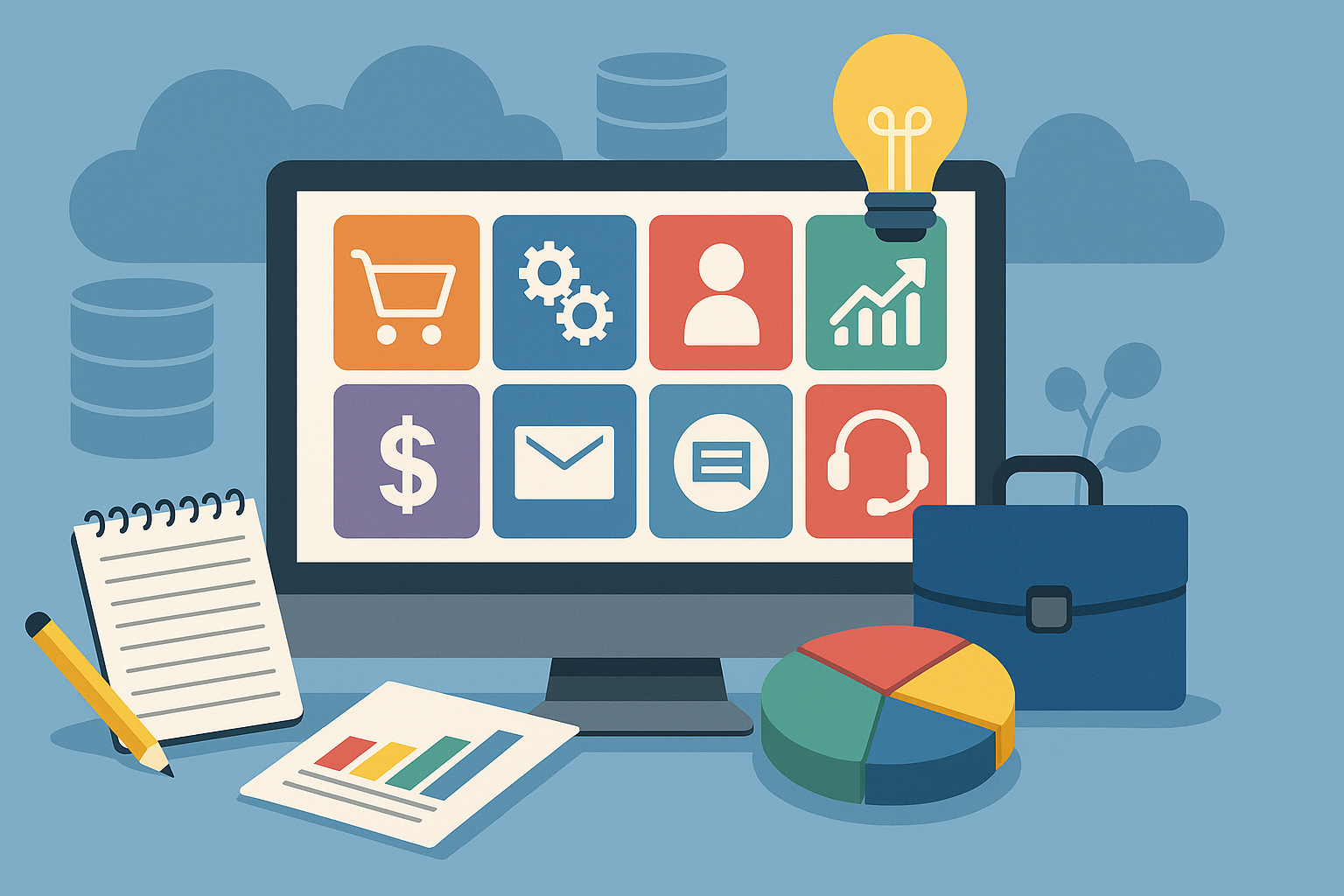
Managing separate systems for customer relationship management (CRM) and enterprise resource planning (ERP) creates data silos. The consequences of this are slow decision-making and limited growth. Microsoft Dynamics 365 (D365) is a suite of intelligent, cloud-based business applications that help businesses of all sizes connect sales, service, finance, supply chain, and operations. Dynamics 365 caters to both the ERP (enterprise resource planning) and CRM (customer relationship management) requirements with dozens of applications and other functionalities.
Dynamics 365 modules are built with productivity tools that help organisations strengthen customer relationships through expedited communication.
What are Dynamics 365 Applications or Modules?
Microsoft Dynamics 365 is a suite of AI-powered cloud applications that combine CRM and ERP capabilities to help organisations manage all critical business operations. This covers sales, marketing, customer service, finance, supply chain, HR, and project operations.
The platform builds on Microsoft’s legacy of Dynamics products (NAV, AX, GP, and CRM) and uses modern cloud architecture, embedded analytics, automation, and integration with Microsoft 365 and the Power Platform. Dynamics 365 is a unified, scalable platform that provides customer relationship management (CRM) apps for sales, marketing, and service, and ERP apps for finance, inventory, and HR. Businesses can choose the apps they need while sharing data across processes.
Different Types of Dynamics 365 Modules?
| Dynamics 365 Module | Key Features |
| Dynamics 365 Sales | Advanced CRM for managing leads, opportunities, accounts, and communications. Uses AI to prioritise deals, forecast pipelines, and automate tasks. Integrates smoothly with Outlook, Teams, and SharePoint for team collaboration. |
| Dynamics 365 Customer Service | Provides consistent support across phone, email, chat, and social media channels. Centralises customer data, tracks cases, manages knowledge bases, and uses AI tools like chatbots and sentiment analysis. |
| Dynamics 365 Business Central | Comprehensive ERP tailored for small and medium businesses covering finance, inventory, sales, projects, and service. |
| Dynamics 365 Finance & Supply Chain Management | Finance manages ledgers, payables/receivables, and budgeting with intelligence. Supply Chain Management optimises manufacturing, warehousing, procurement, and logistics with AI-driven forecasting, real-time inventory, and predictive maintenance—an Integrated cloud-based platform for seamless operations. |
| Dynamics 365 Human Resources | Centralises employee records and streamlines HR workflows. Supports talent acquisition, onboarding, leave and benefits management, and performance tracking. Enhances employee experience via self-service portals and AI insights. |
| Dynamics 365 Project Operations | Integrates sales, project management, resource scheduling, and finance for project-centric businesses. Features AI for better quoting, forecasting, and resource use. Facilitates collaboration through Teams and simplifies time and expense tracking. |
| Dynamics 365 Commerce | Delivers unified retail experiences across online, in-store, and call centre channels. Supports flexible purchasing, integrates POS and back-office systems, and uses AI for personalising promotions and analytics. |
| Dynamics 365 Field Service | Comprehensive on-site service management with intelligent work order handling, optimised resource scheduling, mobile app with offline capability, AI-powered dashboards, and remote technician assistance. Efficiently matches jobs to technicians using algorithms and provides access to IoT data. |
Overall Features of Dynamics 365 Modules/Applications:
- A modular, scalable architecture for businesses to get started with basic applications and keep adding as they grow.
- Dynamics 365 includes AI and Copilot capabilities for forecasting, automatically suggests the best actions, and can draft emails or summarise records using natural language.
- Built-in dashboards and Power BI reports deliver real-time insights. Supply Chain Management offers demand forecasting and planning using AI and historical data, while Finance provides automated financial reporting.
- Dynamics 365 integrates deeply with Microsoft 365, for users to collaborate in Teams, manage documents in SharePoint, and analyse data in Excel and Power BI.
- The Power Platform helps users build custom apps (Power Apps), automate workflows (Power Automate), and develop chatbots (Power Virtual Agents) using Dynamics data.
- Modules such as Customer Service, Commerce, and Field Service provide omnichannel experiences across phone, email, chat, social media, and in-store channels.
- The Field Service mobile app works offline and gives technicians access to work orders, customer histories, and mixed-reality guidance.
- Commerce delivers consistent buying experiences across digital and physical channels.
- Dynamics 365 is built on Microsoft Azure and benefits from Azure’s security controls, including physical and logical access restrictions, segregation of duties, and secure coding practices.
Benefits of Microsoft Dynamics 365 Modules
1. Improves operational efficiency by automating routine tasks and connecting processes for improved visibility.
2. Comprehensive visibility for real-time insights and decision making with a single source of truth across CRM &ERP. Real-time dashboards across operations help track KPIs and enable data-driven decisions.
3. Enhanced customer engagement due to the integration of sales, customer service and marketing functions that track every interaction.
4. Greater agility and scalability due to the cloud-based architecture and modular design of applications.
5. Predictive insights and automation thanks to embedded AI that provides predictive forecasting and automates processes like demand planning, scheduling, and maintenance.
6. Seamless collaboration, as it is integrated with Microsoft 365 and Teams, fosters collaboration across departments. Dynamics 365 also supports remote collaboration via mixed reality.
7. Strong security and compliance as it leverages Azure’s security model for built-in protections and compliance features.
Talk to Kloudify for Dynamics 365 Implementation:
Identifying the right Dynamics 365 apps becomes easier when there is clarity on business needs and challenges. Each Dynamics 365 application includes features designed to enable seamless management of the specific processes it supports.
Microsoft offers scalable, adaptable, and intelligent solutions for all business functions for organisations of varying sizes. Kloudify combines certified Microsoft expertise with a proven, business-first approach. As a trusted Microsoft Solutions Partner, Kloudify ensures seamless integration across Dynamics 365, Microsoft 365, Azure, and Power BI to create a connected, data-driven ecosystem.
Beginning from strategy to support, Kloudify helps organisations modernise operations, boost efficiency, and unlock the full potential of Dynamics 365. Do you want to get started?